DEVELOPMENT REPORT
What early play data revealed about presenting the game
CrazyGames' Basic Launch exposed Cyber Gomoku to a limited audience and reported metrics such as click-through rate and play time. The first day's results pointed to problems not only inside the game, but also in giving players a reason to start and a reason to continue.
Two issues that emerged from the results on the first day
- Percentage of players who selected and played games: 0.3%
- Average play time: 6 minutes 21 seconds
The reference values provided at the time were 2.1% and 6 minutes 37 seconds. The largest gap was in click-through rate, which meant most viewers never reached the game itself.
Instead of reducing the result to “the game is not interesting,” two testable hypotheses were formed: the listing did not communicate the game's appeal, and the game did not give new players a clear follow-up goal.
These metrics describe different stages. Click-through rate reflects the promise made by the thumbnail and title before play. Average play time reflects whether the first experience leads into another match. Because the click-through gap was much larger, presentation became the first target.
Improvement 1: Convey the game content with just thumbnails
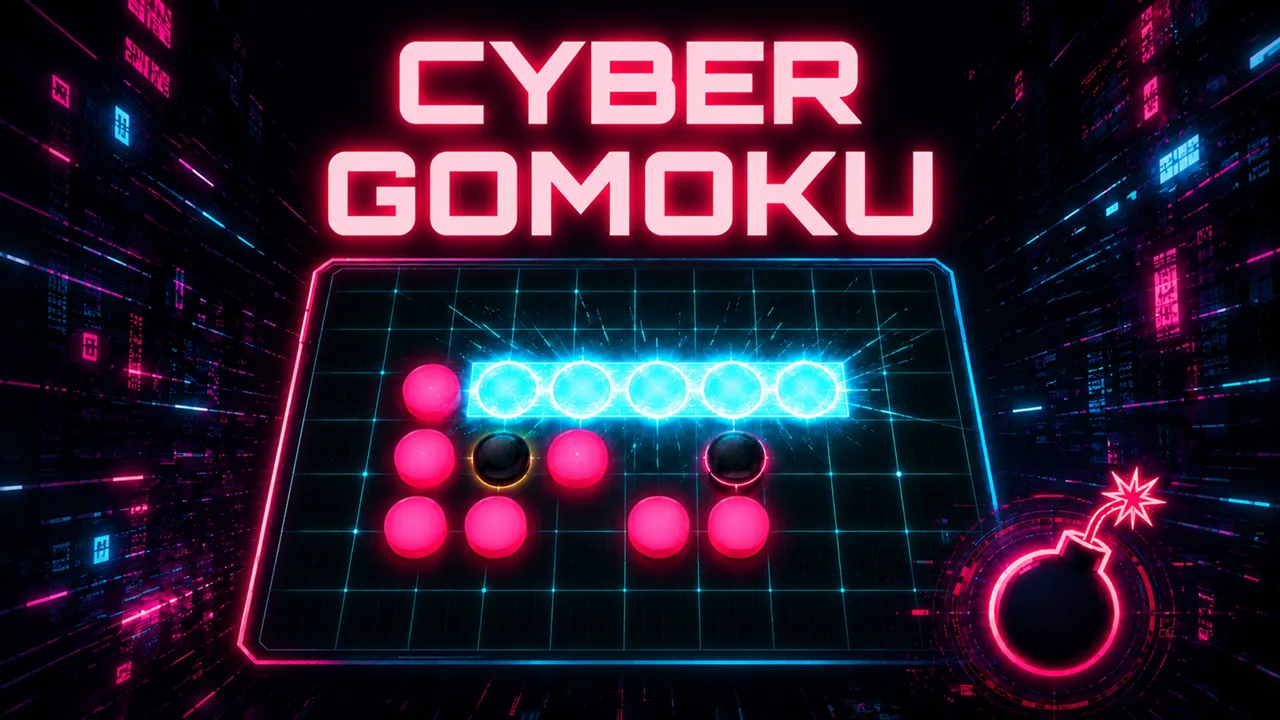
The first cover image prioritized a cyber atmosphere and did not sufficiently express that it was Gomoku or that it had special items such as bombs.
The replacement image was designed to communicate three things directly in the listing:
- Show the title at a readable size
- Show the board and stones so the Gomoku genre is immediately recognizable
- Show bombs and abilities to distinguish the game from standard Gomoku
The goal is not to make things look flashy, but to match pre-click expectations with the actual game content.
Improvement 2: Create a reason to move on to the next game
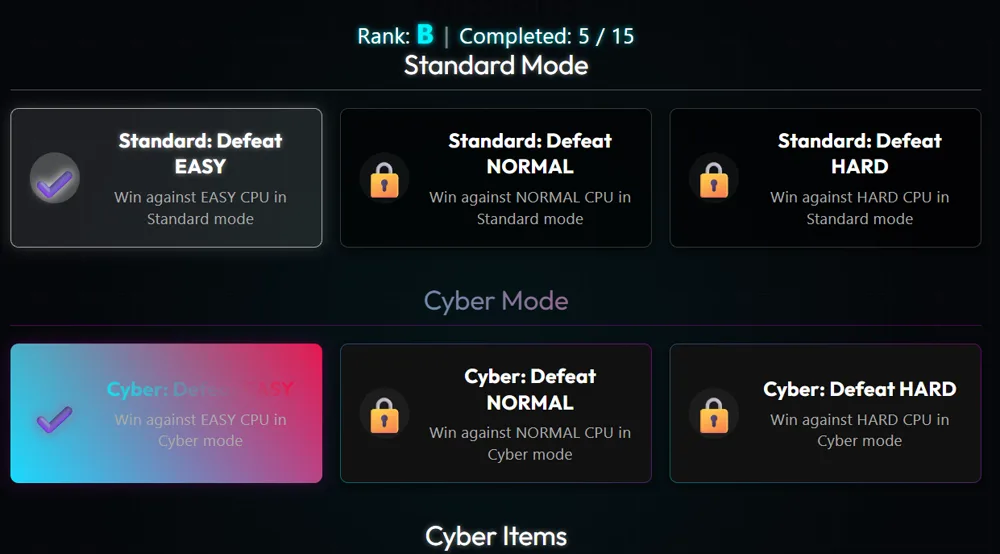
Online rankings were unavailable in the test environment, leaving solo players without a long-term objective. Missions were added to provide goals that work entirely in local play.
Objectives such as “defeat an intermediate CPU” or “win with a Stealth Stone” suggest a specific tactic for the next match and record progress when completed. Implemented missions include:
- Defeat the CPU (any difficulty level)
- Defeat the CPU using Stealth Stones
- Defeat the CPU using Stone Bombs
- Defeat the CPU using the Stone Radar
- Complete the daily "Daily Danger Challenge"
Separate missions for each ability encourage players to move beyond the first tactic that worked for them. They also provide a guided way to experience all three strategic roles in the game.
Things that were easy to overlook in personal development
During development, completing the rules and features took priority. Questions such as “Why should someone start the first match?” and “What leads them to a second?” were postponed.
The results showed that thumbnails, onboarding, and follow-up goals are part of the player experience. Future changes should compare several signals with the actual game instead of treating one metric as a verdict.
Three practical lessons may help other developers preparing for external platforms:
- Map each metric to a stage: Click-through rate relates to presentation, first-session time to onboarding, and return rate to longer-term goals. Decide what each number can diagnose before reacting to it.
- Build thumbnails around genre plus distinction: A viewer should understand both what kind of game it is and what makes it different within a few seconds.
- Create solo progression first: Missions and daily modes still work where online features are unavailable, making them portable across distribution platforms.
The numbers are the values confirmed on the first day of Basic Launch in June 2026. Delivery conditions and evaluation criteria are subject to change.